Small creative agency — portfolio/demo project
Northstar Creative — Internal Operations System
A centralized operations system designed to give a small creative team one clear place to manage clients, projects, tasks, SOPs, and day-to-day operations.
Problem
Work was spread across tasks, projects, client information, team responsibilities, SOPs, and external tools, making it harder to see what needed attention and who was responsible for it.
Situation
Northstar Creative was modeled as a small creative agency handling multiple services and ongoing client projects. The system needed to support several team members, recurring processes, project deadlines, client management, and day-to-day task execution without creating unnecessary complexity.
Diagnosis
The underlying problem was not simply a lack of task management. The different parts of the operation were disconnected. Projects, clients, people, services, tasks, and processes needed to relate to one another inside a shared operating structure.
System designed
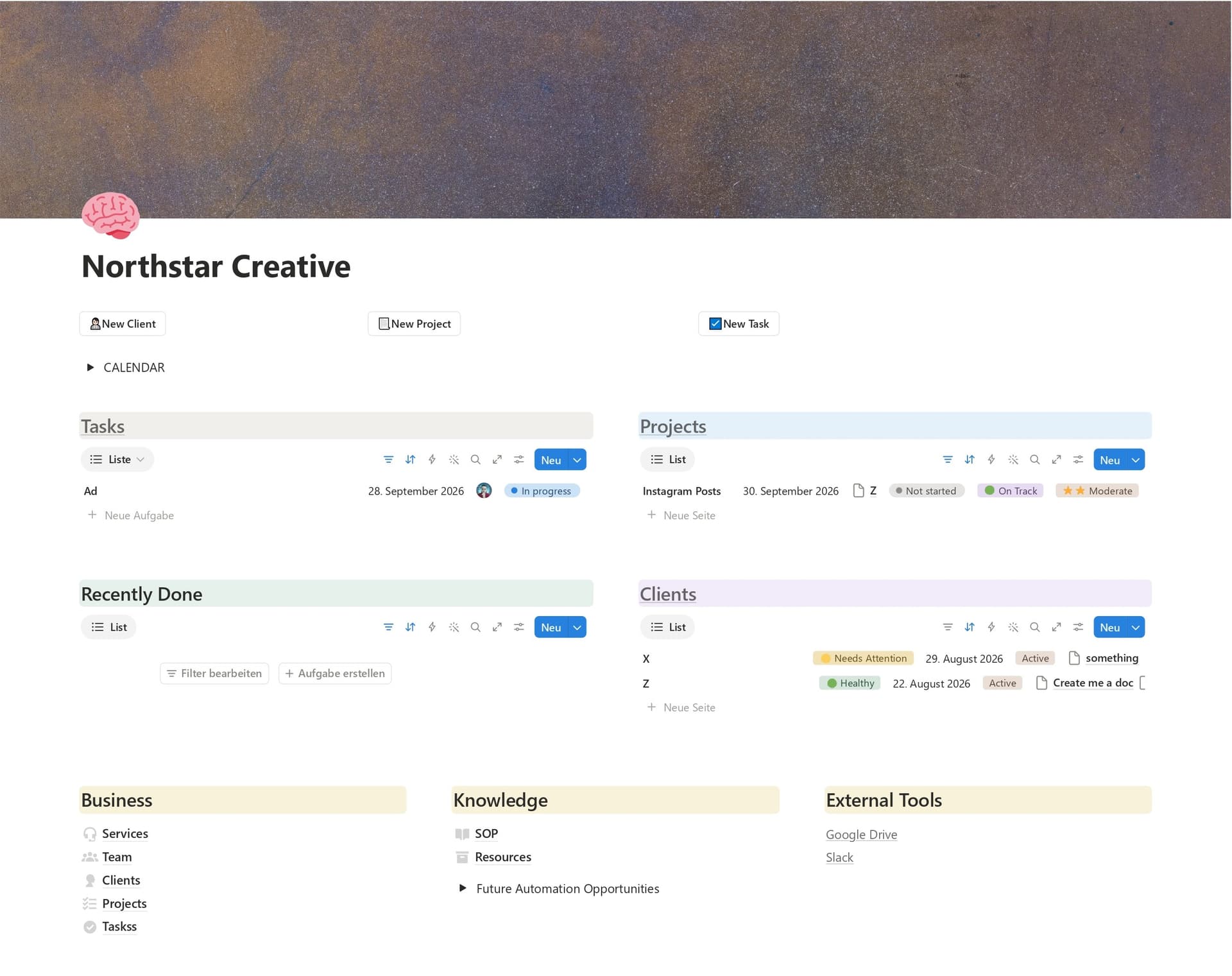
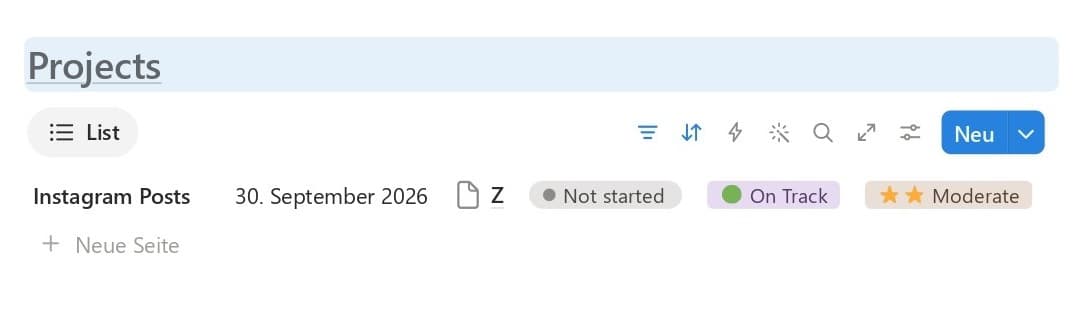
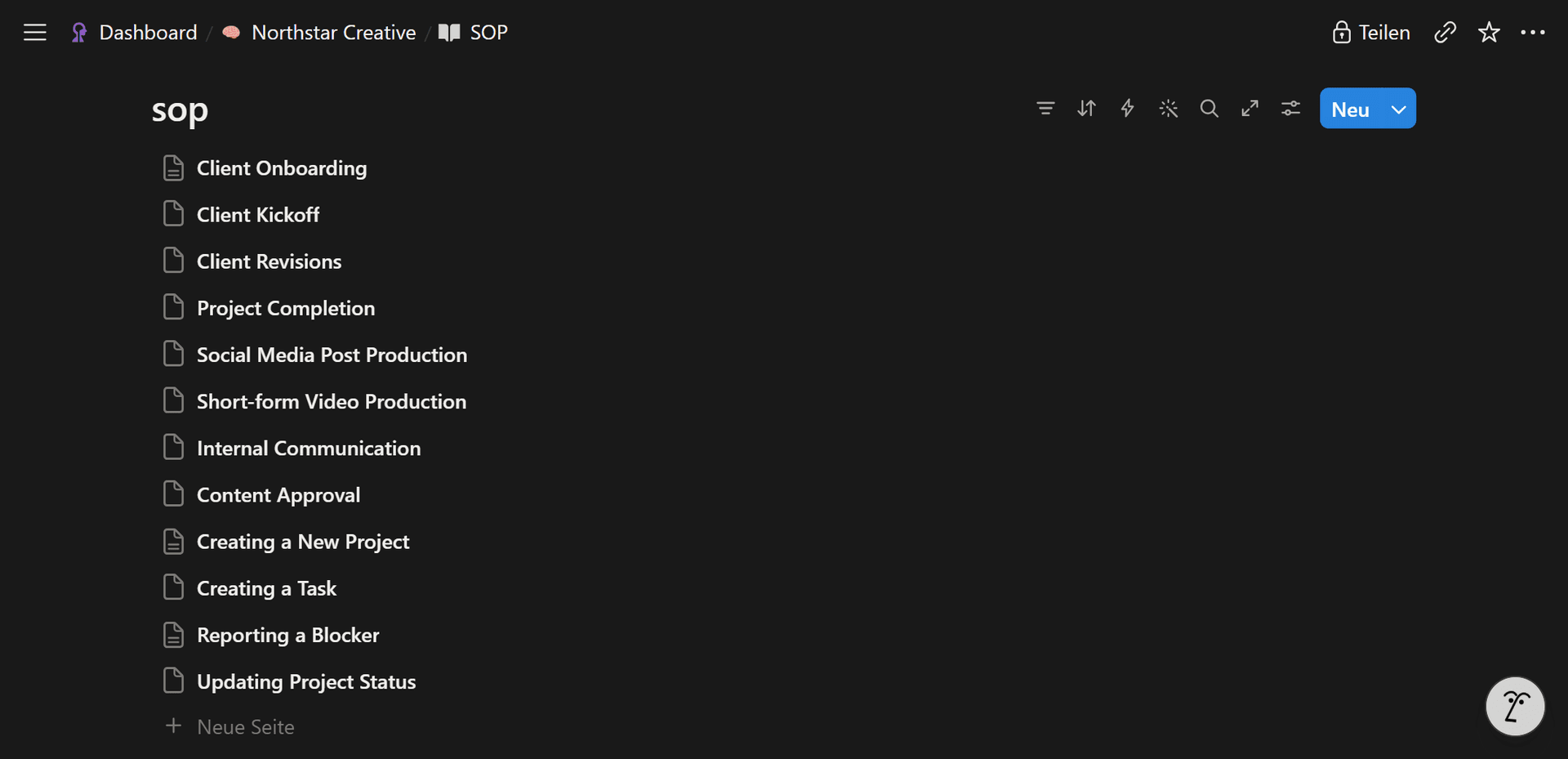
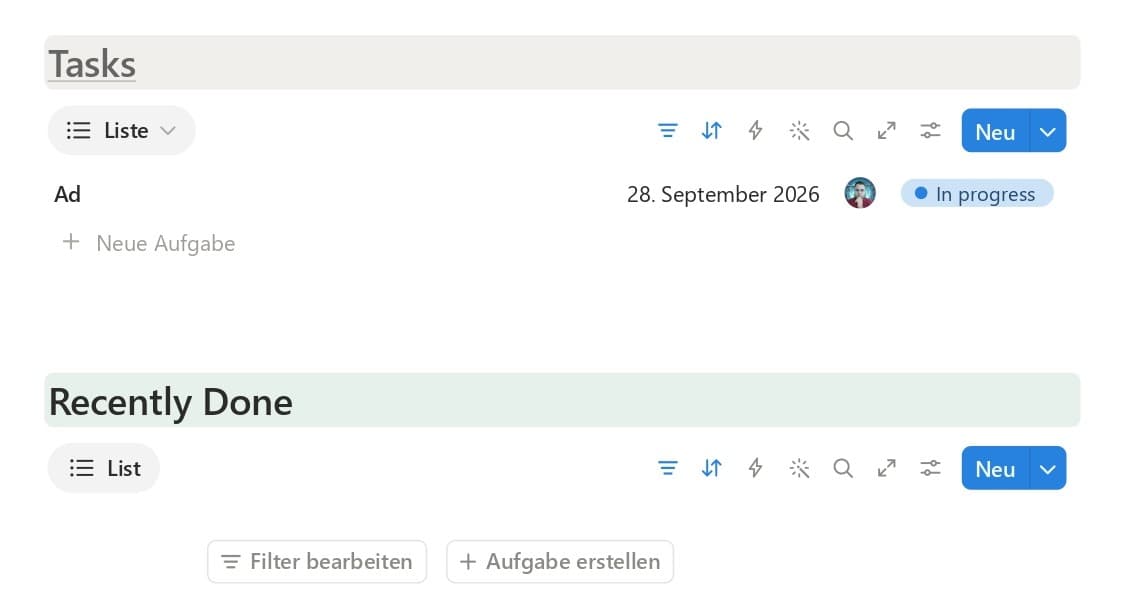
I designed a centralized Notion operations system connecting Services, Team, Clients, Projects, Tasks, and SOPs. The main dashboard provides visibility into current tasks, active projects, client health, deadlines, recently completed work, business resources, and external tools. Projects can be connected to clients, services, team members, priorities, deadlines, and health. A dedicated SOP library documents recurring processes such as client onboarding, client kickoff, revisions, project completion, content approval, task creation, project creation, and blocker reporting.
Implementation
The system was built from the operational structure upward: first defining the core databases and relationships, then creating filtered views for day-to-day work, followed by the dashboard and SOP library. The system was designed to remain usable manually while leaving room for future automation, such as connecting communication tools with the operations workspace.
Result
The finished system provides a single operational structure for tracking work across clients, projects, tasks, people, services, and processes. It is designed to make ownership, deadlines, project health, and recurring procedures visible without requiring the team to reconstruct the state of the business from scattered information.
Lessons learned
A useful operations system does not need the most properties or the most automation. The important part is connecting the information that people actually need to make decisions. Automation can be added later once the underlying workflow is clear and stable. Here's the link to see it live: https://app.notion.com/p/mgbest/Northstar-Creative-3b8050306e0380118b30edcdc8737396?source=copy_link
Say hello
Reader, potential client, or just passing through — I read everything that comes in.